Smead video
At the National Association of Professional Organizers’ conference in San Diego earlier this month, one of the exhibitors in the trade show, Smead Organomics offered professional organizers the opportunity to do a video for their YouTube channel extolling the virtues a Smead product.
Now, I love office supplies and Smead’s products are right up there so I had no trouble saying yes to that. The hard part was choosing what I wanted to talk about and I chose the fun new colors and patterns of their new file folders. I love that companies are getting creative with file folders.
Here’s the video (the still shot is kind of a bummer isn’t it…why are they invariably so bad?):
You can check out other organizers’ videos at Smead Organomics’ YouTube Channel
Help for living your dreams
If you’ve been reading my blog for any length of time, you know that I’m a raving fan of life coach Shannon Wilkinson. She’s my partner in Declutter Happy Hour and has crazy mad skills at helping people make things happen for themselves. A skilled hypnotherapist and Master Practitioner and Trainer of Neuro-Linguistic Programming (NLP), Shannon’s helped me immensely over the years.
Here’s a picture of Shannon, from her website.
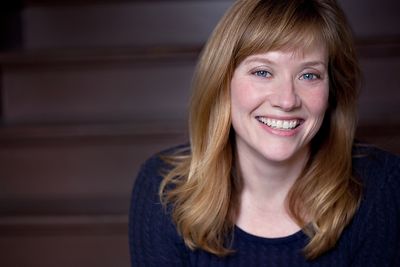
I’m writing today because has a new website, Perception Studios and to celebrate she’s offering some freebies that you don’t want to miss out on.
- She has free monthly group coaching calls starting in May. Good news! There’s no limit to the number of folks who can be on the call.
- She’ll have a limited number of free one-on-one sessions available. She hasn’t rolled that out yet, but if you hunt around a little on her website, you can find a link for a free, 30-minute session. Or you can sign up for her email list on the right sidebar of her website and receive an email about the free sessions next week.
- As always, she offers a free Check in with Yourself audio, which can calm you down on a crazy day.
In addition, she’s rolling out a terrific one-on-one coaching program called You Creating You for people who want to turn their dreams into reality. The program is 18 hour-long phone sessions and you get to decide how long you want to take to complete those sessions (6 months to a year).
If you’ve dreamt of doing something that feels out of reach, Shannon can help you make it happen. Her work is that powerful.
One of my favorite organizing tools
Today at the monthly meeting of the St. Louis chapter of NAPO organizers shared their favorite organizing tools. Those of us who attended the conference shared our favorite conference session. It got to me thinking what I would have shared, had I not gone to the conference.
So I thought I’d share here.
It’s a pop-up leaf container sold at hardware stores and places like Amazon. Here’s a picture of one, though it’s not the exact one I have.
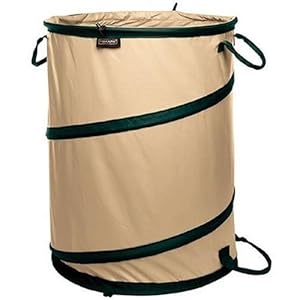
The one pictured above is the Fiskars 9405 Kangaroo 30-Gallon Gardening Container
I know it doesn’t look like an organizing tool. But I take it to clients’ homes for decluttering sessions. It can hold trash, recyclables, or charity donations. (It’s great for a closet clean-out.) I put a 39-gallon clear trash bag in it and it makes life so much easier, because we’re not constantly opening bags. We can just toss things in!
The best part is that it collapses flat and I can just keep it, and the bags, in my car’s trunk.
Do you have a favorite organizing tool?
Having fun, learning lots
There’s little I like better than having fun while learning. And that’s exactly what I’m doing here in San Diego at the NAPO conference.
If you’re a professional organizer and you’ve never been to a NAPO conference, please make a promise to yourself that you’ll go to the next one, in Baltimore, March 21-24, 2012. Besides learning loads, you meet the most wonderful people.
When I went to my first conference in Boston in 2006, I could have never predicted that five years later, I’d have a picture like this taken with two of the most prominent POs in the industry.

That’s Geralin Thomas on the left and Standolyn Robertson on the right. If you watch Hoarders, you may well have seen these lovely ladies, who both appear regularly. Standolyn was president of NAPO from 2007 to 2009. She’s hot stuff. I’m so fortunate to call both of them my friends. (Geralin’s even one of my roomies.)
And isn’t the photo cool? NAPO had HDPhotoBooth there taking pictures. We’d stand in line at the trade show and get our pictures taken (they encouraged us to be goofy). They even printed a copy of each photo for us. If you’d like to peruse all the NAPO photos (there are hundreds), check ‘em out here.
If this post has inspired you to attend an organizers’ conference, I have good news. You don’t have to wait until 2012. You can attend the more intimate but equally fabulous annual conference of the Institute for Challenging Disorganization. It’s September 15-17, 2011 in Raleigh, N.C. The conference theme is Acquiring Minds: How We Think, Act, and About Possessions. It promises to be great.
Geralin and I will be there and, I hope, Standolyn too. Please join us!
Off to San Diego!
I leave this afternoon to fly to San Diego for the annual conference of the National Association of Professional Organizers. This will be my sixth NAPO conference in a row and, as always, I’m very excited.
Here’s why I think attending the conference is well worth the investment of more than a thousand dollars (for registration, airfare, hotel):
- The educational opportunities are terrific. This large conference offers a wide variety of sessions from which to choose. I had a very hard time deciding which I wanted to attend.
- The trade show is great. I love learning about new organizing products, learning more about products that aren’t new, and getting to know the people who market them.
- The networking opportunities are fantastic. I always meet new and wonderful people. And, even better, I get to see the organizers I already know and love.
- The slumber party aspect is fun. This year, I’m sharing a suite with my pals, Geralin Thomas and Margaret Lukens. Talk about a fun getaway!
- The location is beautiful. I don’t go to the conference because of the location. But it’s always nice to see palm trees.
Incidentally, on Monday I mentioned that I was on the fence about bringing my computer along so that I could keep my inbox zero streak going. I’ve decided to leave my computer at home, but use LogMeIn Ignition to access my computer remotely from my iPad and stay on top of email. I tested it this morning and I it shouldn’t be a problem. That makes me happy!
The amazing power of the chain
I’ve written here before about Don’t Break the Chain as a tool for helping create daily habits. The concept is that once you do something a few days in a row (which can be aided by marking a calendar), you psychologically don’t want to break the chain and you’re motivated to do the activity again.
Right now, I have two chains going: I’m getting my email inbox down to zero messages by the end of each work day (I’ve been doing that since January 2) and I’m blogging every Monday, Wednesday and Friday (which I’ve done without fail since December 27).
Don’t Break the Chain (which I first read about in this Lifehacker post) is a little harder for a Monday/Wednesday/Friday activity, so I created a little four-column table in Pages, with the Monday date in the first column and Monday, Wednesday and Friday in the other columns. I printed it, posted it on my bulletin board and when I do the blog post, I mark an X in the appropriate M/W/F column, thus creating my chain.
Now that I have about three months of chains under my belt, the habits are pretty well ingrained and it’s not too difficult to accomplish those two tasks.
That said, both habits were put to the test this past Friday. I needed to be out of the house early and I got up a little late. So I had little time to write a blog post and even less inspiration about what to write about. (I try to plan ahead, but don’t always succeed.) Under normal circumstances, I would have just bagged it. But I didn’t want to break the chain, so I did manage to post something (not much, but something).
After having left the house early, I didn’t return home until 10:45 p.m. I had a whole day’s worth of email in my inbox and I didn’t feel like going down to my office to deal with it. I just wanted to go to bed.
I gave myself permission to break the chain. But then my dog, Kirby, asked to go out, so I had to walk by my office. While he was outside, I sat down at my computer and plowed through my email. It turned out it was a fairly light day for email, so I was able to get my inbox down to zero in less than a half hour.
The only reason I felt compelled to do that was that I didn’t want to break that chain. It has a powerful hold on me.
I’m leaving on Wednesday to go to San Diego for the NAPO conference and I don’t plan to take my computer with me. (I’ll have my iPad.) If I follow through with not taking my computer, I’ll have to break the inbox zero chain. (I download my email to my computer, rather than dealing with it on a website.) I have to admit the prospect of breaking the chain is unattractive enough that I might actually lug my computer along on the trip.
If you have a daily (or at least regular) habit you’re trying to develop, I can thoroughly recommend the Don’t Break the Chain method of motivating yourself. Go read the Lifehacker post to get a complete view of it. (The concept is credited to Jerry Seinfeld.)
How's your mail doing?
 I was looking back at posts from a year ago and was reminded that on April 5, 2010, I posted the results of a poll I did on the blog about how you handle your mail.
Difficulty with dealing with the snail mail that comes through the door is a recurring problem I see in my new clients. Nearly every one who has problems with paper clutter finds it exacerbated by the postal mail.
That’s why I created the Make Peace with Your Mail e-course, to help people save time and eliminate stress surrounding their mail (all in four easy lessons).
I’m going to be offering a contest related to Make Peace with Your Mail in the very near future, so please keep your eyes on this space for details. I’ll also be publicizing it on Facebook and Twitter, so feel free to use the new big icons at the top of the right sidebar to follow me in those places, if you haven’t already.
Search
Recent Posts
- Worth repeating: Figuring out what to watch on TV
- The power of incremental progress
- Podcast guest spot on the role of organization for folks with chronic illness
- No excuses series (part 3): "It was a present"
- No excuses series (part 2): "I paid a lot for that item"
- No excuses series (part 1): "But I might need it!"
- Retiring the New Organizer Guides
Tags
About Janine

Hello! I’m Janine Adams — a certified professional organizer based in St. Louis, and the creator of Peace of Mind Organizing®.
I love order, harmony + beauty, but I believe that the way that you feel about yourself and your home is what truly matters.
If you’re ready to declutter with a purpose and add more ease to your life, you’ve found the right blog — and you’ve found the right company.
read more »Links
- Institute for Challenging Disorganization
- Shannon Wilkinson, life coach
- Organize Your Family History
- Are you interested in becoming a professional organizer?
- Ravelry
- Peace of Mind Spending
- Getting to Good Enough podcast
- National Association of Productivity and Organizing Professionals
- NAPO St. Louis