Packing mindfully for a trip
I’m packing for a nine-day trip to Walla Walla. This time, I’m determined not to overpack. The last two trips I took, I ended up packing way more than I wore.
It’s going to be hot there: At or over 100ºF most days. I get cold easily, so I always have bring layers for over-air-conditioned spaces. Mostly I’ll be hanging out with my dad, who is living in a care facility, so short sleeves will be my uniform.
I’ve embraced a smaller wardrobe for years, ever since I tried out Project 333 back in 2016. Since participating in the Wool& 100-day dress challenge from November 2020 to March 2021, I’ve worn merino wool every day and most days I’ve worn a dress. So for this trip, it’s a matter of deciding which dresses to take. (I have to admit that my collection of Wool& merino dresses has ballooned to 15.)
I made a list of four dresses to take, which should cover everything, even going out to dinner. I bet I can bring one, maybe two, sweaters that will work for all four dresses. I am trying to resist the urge to add more options. I know that I could wear the same thing every day and no one would notice (and thanks to the magical properties of merino wool, I can get away without doing laundry). When I actually pack tomorrow, I’m going to try very hard not to throw in extra items just in case.
Why am I doing this? To see if I can. (And I know I can.) I have felt frustrated with myself in the last two trips for carrying more than I need. This time, I want to write my feelings in my bullet journal, reflecting on whether I feel any frustration over not having more clothing options. I suspect that instead of feeling frustrated, I’ll be pleased that getting dressed is easier. I promise a future post about how it worked out!
Worth repeating (again): Making a move easy(er)
My work life has been dominated in recent weeks by a helping a lovely family move from a large home to multiple destinations. It got me thinking about the tips I wrote eight years ago in this post that I think are still spot on. Check out Operation: Relocation page if you’re in St. Louis and planning a move. We’d love to help!
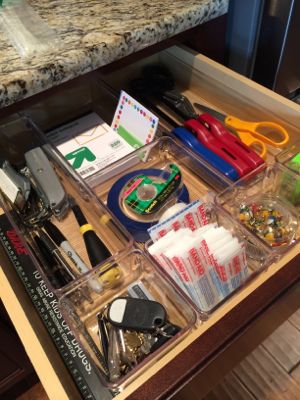
A supply drawer we created while unpacking a client
Moving is stressful. There’s pretty much no way around it. Even if an employer is paying for the move and you have the movers pack you, there are a lot of details with which to contend and it’s a hassle. Working with a professional organizer can help, but even so, the process is stressful.
I’ve recently helped several clients settle into their new homes by bringing in teams to unpack and organize their belongings. All of them were packed by the movers. Observing how the unpacking and organizing process went, I’ve identified a few ways to make the move easier:
- Start early. It’s easy to procrastinate on decluttering, packing, and making logistical arrangements. But the more time you can give yourself, the less stressful the process will be—and the more likely you are to avoid last-minute crises.
- Declutter before the move. If an employer is paying for the move, you might be inclined to delay decisions about letting go of stuff until after you see how it might fit into your new home. But believe me, by the time you’re in the unpacking phase of the move you’re going to be tired. And the fewer decisions you have to make when you unpack, the happier you’ll be. Less stuff = easier move.
- Go through the unopened boxes from the last move. If you’ve been in your home awhile and there are still unopened boxes in your storage area, don’t just move them. Open up those boxes and find out whether the items inside merit the space you’re giving them and the effort and money involved in moving them.
- Categorize before packing. If each box contains a category of items, unpacking is much more streamlined, and less frustrating. It can also make it easier to find an individual item before you’ve finished unpacking. If you don’t organize before you pack, you’ll end up with a hodge podge of items in each box, which can create headaches when you’re unpacking.
- Mark the boxes for the destination room. If the layout of your new home is different from the old one, try to mark the boxes for delivery to the appropriate room in the new home, rather than the room it came from. That way you’ll be able to stay in the room that you’re unpacking.
- Try to unpack as much as possible as soon as you move in. I’m typically a big fan of little and often, and if you need to break down unpacking into tiny chunks in order to get it done on your own, so be it. But if you can power through the unpacking process so that you get rid of boxes and get settled, the transition will be easier.
- Unpack the kitchen first. I think it’s hard to get a semblance of normalcy until your kitchen is unpacked. When you can make coffee in the morning and fix yourself a snack, life is better. Eating off of real plates rather than paper plates will make you feel like you’re home.
- Let go of perfection. Don’t get bogged down in the unpacking process trying to decide the perfect place to store items. You can always improve on it later. Just choose a location and see how it works.
- Enlist help. Unpacking a home on your own can be overwhelming. Enlist the help of friends, family or a professional organizer (or organizing team). In the last two unpacking jobs we did, we were able to get the entire homes unpacked in two days. It felt like a miraculous transformation—from a sea of boxes to a comfy home in two days. The clients still had tweaking to do, certainly, but they were able to get in with their daily routines.
Yes, moving is stressful. But it doesn’t have to be a nightmare. With a little planning and forethought, you can make it relatively easy.
Interview on Sunbound
I was approached for an interview by Nat Miller, co-founder of Sunbound, a a one-stop relocation service that works with professional organizers across the country to help older adults (55+) relocate to their retirement destinations. Since Sunbound partners with professional organizers (they are a business partner of NAPO), they are spotlighting organizers from around the country as part of their mission to help educate and empower America’s older adults.
I had a lovely conversation with Nat last week and the resulting Q&A was published yesterday! I encourage you to check it out if you’re curious about my origin story as a PO, my favorite spaces to organize and what I see as trends in the industry.
Hangers designed specifically for long dresses
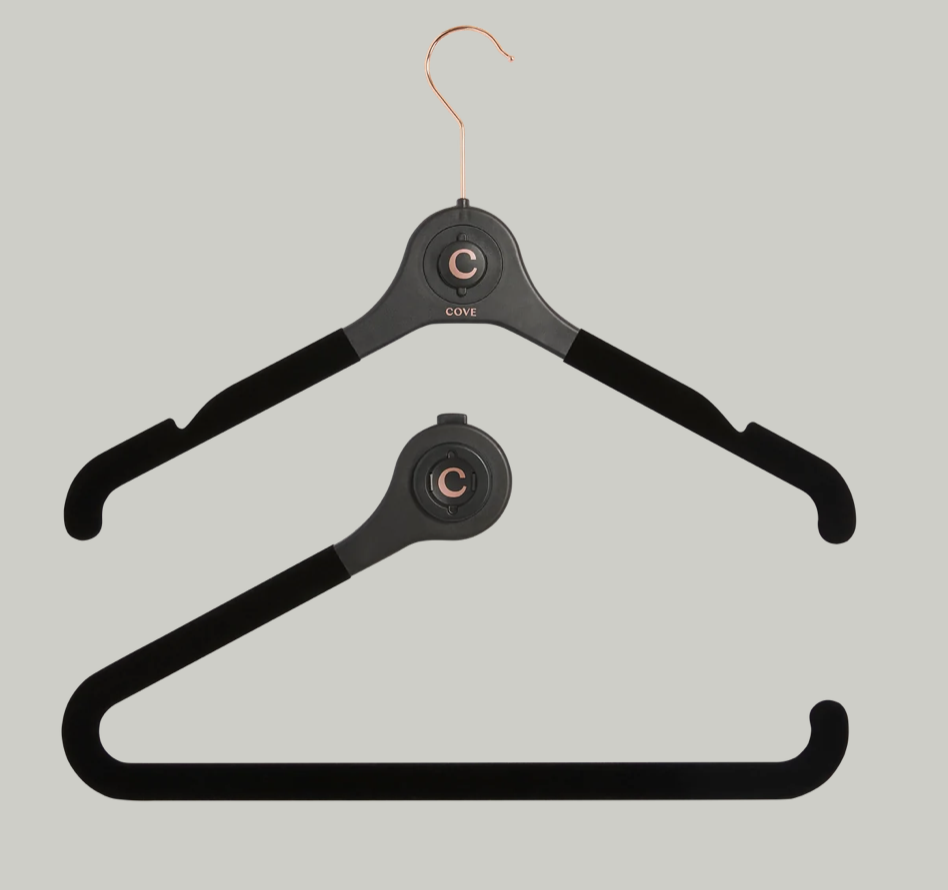
If you have evening gowns or maxi dresses, you know how they can graze the ground even in your long-hanging area of your closet. That’s bad enough. But if you don’t have a long-hanging area in your closet, it’s really challenging to hang long dresses and keep them in great shape.
Enter Cove. They’ve created a special long-garment hanger specifically to solve this problem. They reached out to me offering to send me a sample and I was curious, so I accepted it. I actually own one maxi dress (and zero evening gowns), and I put it into immediate use.
The hanger consists of two parts. The main part has the hook that goes over the rod and the shoulders of the dress go over it, like a conventional hanger. The second part attaches to the main hanger with a click. You press a button to detach the two parts. The second part consists of an open ended horizontal piece, like a pants hanger. You put the bottom of the dress over that and draw it up to the main hanger.
Here are a couple of photos, because I’m not sure I’m describing it well.
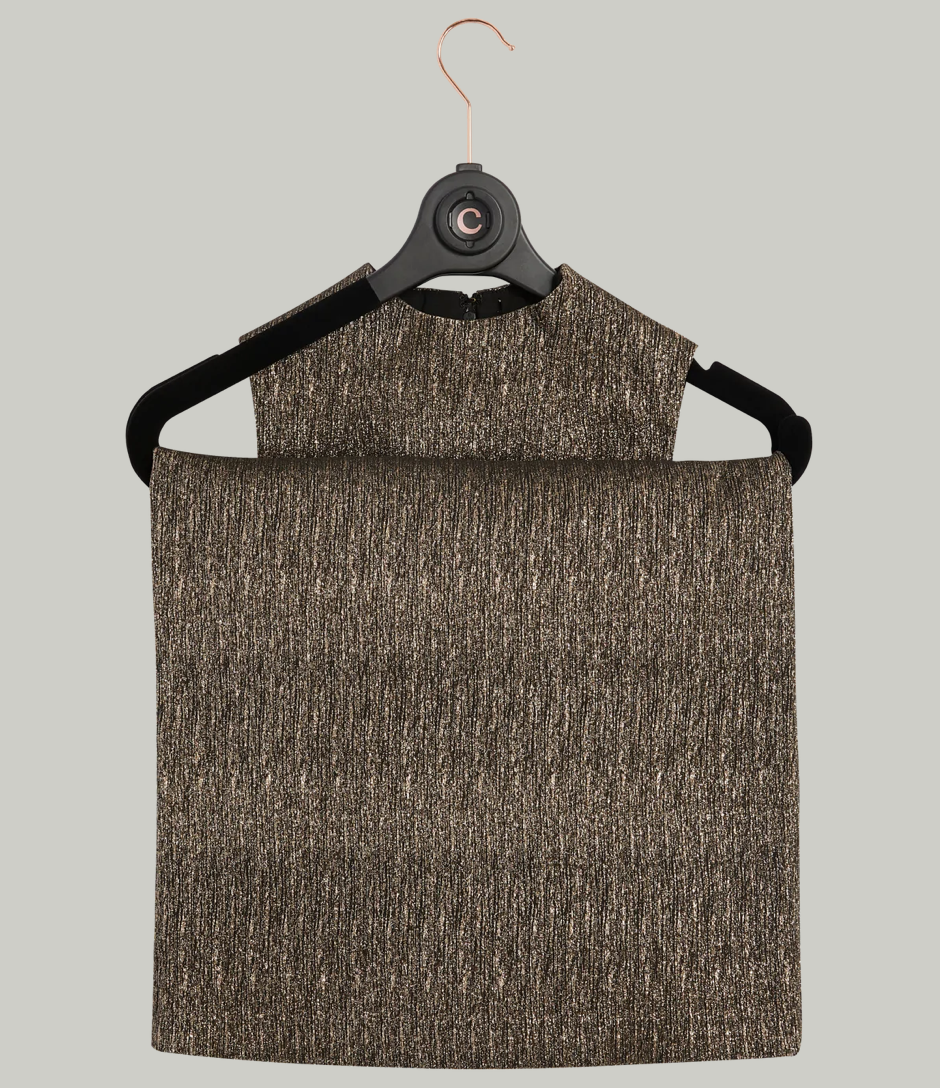
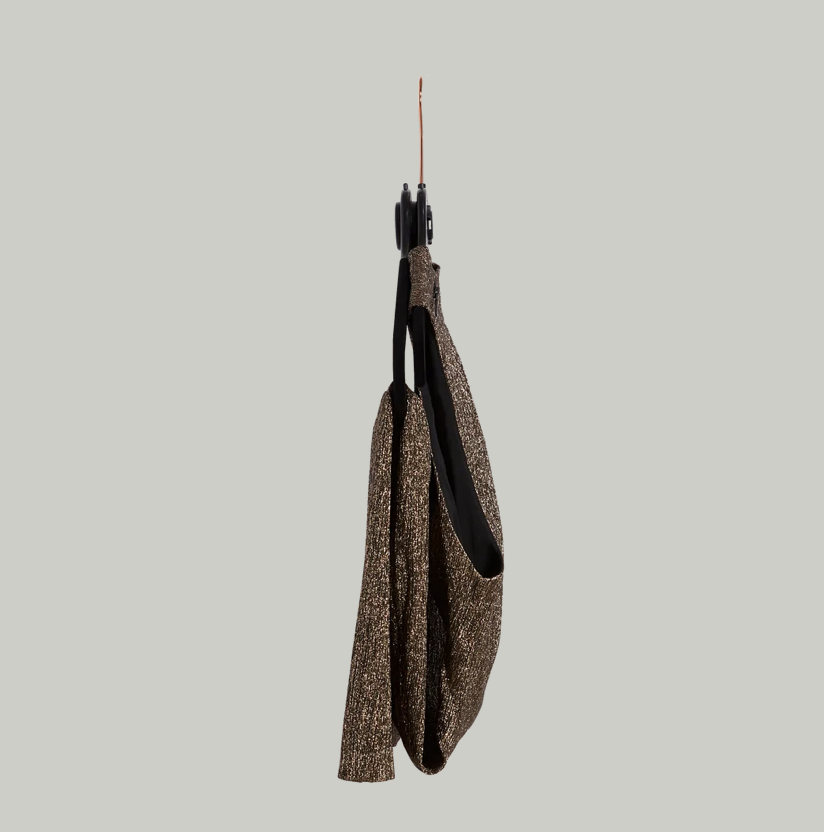
This hanger takes up more space on the rod, but it keeps these dresses safe and tidy. The hanger retails for $22.00 but Cove has kindly offered a 20 percent discount to readers who use the code PEACEOFMIND20 at checkout. (If you use this link or the link at the top of this post, the code will be automatically entered for you.) Cove also offers discounts if you purchase the hangers in bundles of three or five.
I’ll be recommending the long-garment hanger to those clients with plenty of rod space (and budget) who have long dresses to hang!
Trying to resist Amazon Prime Day

I love a bargain, but I hate false urgency more. I end up buying things that I regret later, which wastes money and makes me feel bad. That’s why I try to avoid outlet stores. And that’s why I’m going to try hard to avoid perusing the Amazon Prime sales tomorrow and Wednesday.
A huge source of clutter in people’s homes (including mine) is so-called bargains. It’s hard to resist a good deal on something, even when I don’t really need it or have a good place to store it. Here’s the thing: The more stuff we have in our homes that we don’t use or love, the harder it is to put away and find those things we do use or love.
Will you join me in resisting unnecessary purchases on Amazon Prime Day? If you do have legitimate needs, by all means go ahead and get a deal on them. But if there’s nothing you’re really in need of, I urge you to step away from scrolling through the deals. Why tempt yourself unnecessarily?
Summer blogging schedule

I try to post here twice a week. My goal is always Mondays and Thursdays. It’s a bit hit or miss, I admit, but that’s the goal. I also strive to post twice a week on my genealogy blog, Organize Your Family History.
This summer, I’m especially busy with organizing clients and travel and trying to keep up with that blogging schedule has been stressing me out a little. So I’ve decided to relieve the pressure and commit to blogging just once a week through the rest of the summer. I’m not even going to commit to a particular day, but you can expect to see a new post once a week.
When I made the decision to cut myself that little bit of slack I instantly felt relief. I’m also using the same schedule for Organize Your Family History. And now I feel I can breathe a little more easily.
Is there some way you can cut yourself a little slack this summer and relief the pressure to do everything? It’s worth thinking about!
Photo by Valerian KOo on Unsplash.
Worth repeating: What have you been putting off?
I wrote this post in 2016. It’s an important reminder for me because I’ll be due for another colonoscopy in the coming year. It’s so easy to let fear get in the way of doing things we know will benefit us, like going to the dentist or planning for retirement. I hope this post might help you take action on something you’ve been putting off.
I had a colonoscopy this week. I’m 53 (and a half) years old and for the past 3.5 years I’ve been putting off getting the screening colonoscopy—a procedure that can catch deadly colon cancer while it’s still treatable—that’s recommended for everyone at 50 years old.
I’m a smart woman. I know it’s a good idea to get a colonoscopy and that sooner is better than later. But I couldn’t get myself to do it. My college buddies encouraged me to schedule it (they’d done theirs). But I resisted. Finally, I got a new primary care physician and she basically made the appointment for me.
Why was I dragging my feet? Partly because of the horrible things you hear about the prep (the bowel has to be cleaned prior to the scope). But, in truth, there was also a certain amount of fear that there would be bad news. Irrational, but true. Because of course, if I did have colon cancer, it was better to know than not know. But not knowing bad news can feel safer than knowing it.
Well, it turned out that the prep wasn’t all that bad. Not fun, but not tortuous. And the procedure itself was nothing, because I slept through the whole thing. When it was over the news was good—and immediate. Everything normal. Come back in ten years.
I can’t tell you how good it feels to have that behind me. I didn’t realize the psychic energy I was expending avoiding it. It makes me want to find something else I’m afraid of and just do it.
How about you? Is there something you’ve been putting off? Could you take a tiny step today toward doing it? Trust me, you’ll feel better when it’s done!
Search
Recent Posts
- Worth repeating: Figuring out what to watch on TV
- The power of incremental progress
- Podcast guest spot on the role of organization for folks with chronic illness
- No excuses series (part 3): "It was a present"
- No excuses series (part 2): "I paid a lot for that item"
- No excuses series (part 1): "But I might need it!"
- Retiring the New Organizer Guides
Tags
About Janine

Hello! I’m Janine Adams — a certified professional organizer based in St. Louis, and the creator of Peace of Mind Organizing®.
I love order, harmony + beauty, but I believe that the way that you feel about yourself and your home is what truly matters.
If you’re ready to declutter with a purpose and add more ease to your life, you’ve found the right blog — and you’ve found the right company.
read more »Links
- Are you interested in becoming a professional organizer?
- National Association of Productivity and Organizing Professionals
- Institute for Challenging Disorganization
- NAPO St. Louis
- Getting to Good Enough podcast
- Organize Your Family History
- Shannon Wilkinson, life coach
- Peace of Mind Spending
- Ravelry