Chipping away at a project
Sometimes projects, big or small, feel too overwhelming to even start. Sometimes tasks are ongoing or recurring and we have a tendency to let them build up before starting to tackle them.
For either of those types of projects, one solution is to do a little. Just do something. Because a little effort on a regular basis will get the job done, eventually.
I’m experiencing that right now when it comes to getting caught up with my Quickbooks bookkeeping for my business. In the past, I’ve let it build up and tackled months’ worth at a time. I’m happy to say that that’s not been the case this year, but I still struggle to stay caught up with it. As of this afternoon, I was about three weeks behind and, despite some dueling priorities, I decided I had to get at least some done. So I’ve been working on it for the last hour or so and by the time I quit for the night, I’ll at least be caught up with August and I’ll have entered all September deposits and checks. That’s my vow to myself. Knowing I don’t have to do it all in one session allowed me to get started.
I received an email over the weekend from a woman who had attended a talk I gave this summer. In that talk, I encouraged people to just spend 15 minutes a day on organizing or decluttering. Much like my bookkeeping, I urged them to just do something even if the job wasn’t finished.
This woman was kind enough to share with me that she took my advice to heart and 15 minutes at a time, tackled 12 years’ worth of accumulated financial papers. These were papers she hadn’t been able to face after her husband died. Now they’re processed and, as necessary, shredded.
This was a task that was completely overwhelming and emotionally difficult for her. 15 minutes at a time (sometimes 30), she got it done.
So there you have it. Whether you’re looking at overwhelming backlog or just keeping on top of a task (like data entry or laundry) so that it doesn’t get overwhelming, you can chip away at it, doing a little bit at a time, can make it much easier.
Need a reason to declutter? Do it for your pets
Many of my clients are animal lovers. I’m an animal lover too. I even made my living as a pet writer before becoming an organizer. Perhaps I attract animal lovers.
I’ve never worked with animal hoarders (nor do I aspire to), but I’ve worked in severely cluttered homes that were also home to a few animals. I’m always amazed at how the animals maneuver around the clutter.
For some high-energy dogs or cats, a cluttered environment might feel like a fun playground or obstacle course. But I believe that most animals enjoy an orderly just like many humans do. They want wide open spaces in which to rest and play. They want to be able to get around easily.
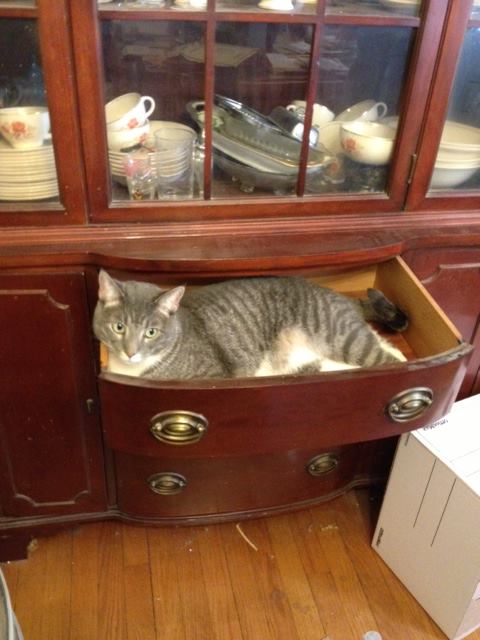
This was brought home to me recently when my team worked on decluttering the crowded living space of a home occupied by one human and one young cat. As soon as we would clear a space (the top of the dining room table, for instance), he’d jump right up. Every time I turned around, it seemed the kitty had found a new spot in which to rest.
My favorite such moment was when I looked up and there he was in a china cabinet drawer that had just been emptied:
A little later, my heart sang when he started batting his toy around the newly clear living room floor.
If you’re looking for a reason to declutter your home, do it for your pets. I’m confident they’ll be happier and more comfortable.
Worth repeating: My adventure with a professional organizer
Back in 2009, as a requirement for the CPO-CD® program, I hired a professional organizer to help me in my home. It was a great experience and I blogged about it at the time. The post is still true (and, I think, interesting). I really loved being in the client’s shoes, and, four years later, I still reflect on that experience when I’m working with clients.
As I blogged about the other day, I hired professional organizer Karel Worley of Clearing Your Path, to come to my house and help my husband, Barry, and me declutter our basement.
We had four hours to spend on it yesterday. Barry was sure that wouldn’t be enough. In that time, we finished the decluttering, though Karel’s going to come back and help me put up some shelving and organize what’s left.
It was tremendous! First, a little background: we have a scary, yucky basement (as you’ll see in the photos below) and lots of room down there. We had a tendency to just dump stuff in the basement, rather than making a decision to get rid of it or store it properly. We also had stuff in the basement that was there when we bought the house in 1992. And, I think, some stuff that tenants put there when we were living in New York from 1997 to 2001.
So there was a lot to get rid of. And a lot of stuff that I feel Barry had resisted letting go of in the past. Okay, me too.
I’m here to tell you, there’s something about working with a professional organizer that shifts the way you think about stuff. Barry was letting things go with abandon. It was wonderful. I let go of some big stuff, like the two file boxes full of files containing background material for each of the articles and books I’d written in the past when I was a freelance writer. It was absolutely liberating.
Here are a few of the benefits that I observed of working this with Karel versus trying to clean out the basment without her help:
- She kept the momentum going. Karel wasn’t still for a moment. When she wasn’t assisting us specifically, she’d work on her own to declutter obvious trash and organize what was left behind.
- She kept us focused. Knowing she was there for a set period of time, for example, stopped me from spending much time going through the box of photos I found from college and my 20s. I look forward to going through them later, though!
- She offered advice on what was appropriate for donation or sale (and what wasn’t), which was so helpful. I kept second guessing myself on that, though I usually have no trouble advising clients about that.
- She asked some powerful questions to guide my decisions about keeping or letting go of some more difficult items.
In addition, I noticed some things about myself, which really helped put me in my clients’ shoes. There were a few items, not sentimental items, but more like office supplies that I’d used in the past or might want to use again (or perhaps give to clients), that I’m sure I would have rooted for a client to get rid of. But when Karel asked me the same questions I’d ask a client, I resisted letting the stuff go. And mostly I kept it. But I kept so little, I’ll be able to organize and store it sensibly.
Also, I experienced something that I’d seen in clients, but never really understood. I had a couple of items that I didn’t want, but I didn’t want to donate them. Instead, I wanted to give them to someone I know. (I don’t have anyone in mind at the moment.) In other words, I wanted to be able to offer them to someone specific, not just give them to an anonymous person who could use them. In the past, when clients would express this, I didn’t really get it. Now I do.
I’m absolutely amazed we got as much done as we did in just four hours. and I know you’re dying to see before-and-after pictures. So here you go:
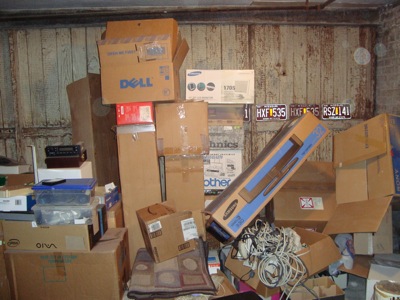
We had a tendency to keep computer and appliance boxes.
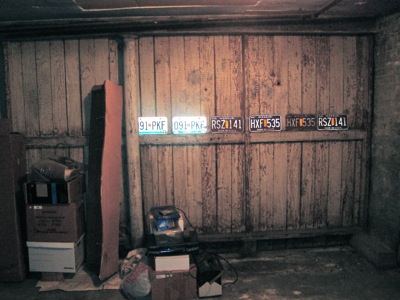
Boxes gone!
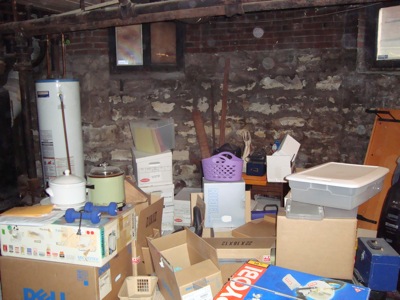
This was primarily my dumping ground.
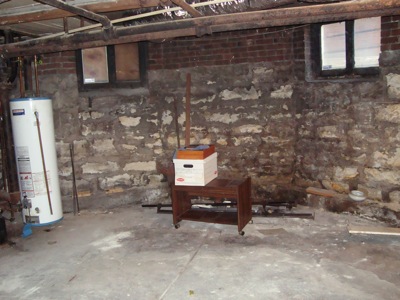
We got rid of much of it and stored the rest on shelves elsewhere.
The stuff that’s not being recycled, donated, or shredded is being hauled away. (I’m planning to use NAPO St. Louis associate member, Junkman4Hire.com.)
Thank you, Karel, for your help. It was a wonderful experience!!
Decluttering my keys
I’m a big believer in having one place where the keys are placed when coming in the door. In our house, it’s been a coated-wire basket just inside the back door, where we enter from the garage. We now automatically drop our keys right in the basket.
The trouble was every key we owned was in that basket, so in order to find the keys I needed on a daily basis, I was having to do a little searching. After a few months of telling myself I needed to do something about it, I finally did.
I thought maybe key hooks would be a good idea for our most frequently used keys, but my husband really likes the ease of just dropping the keys in a container. And who am I to argue with ease?
So here’s how it went, step by step. I was a little surprised that it ended up taking two full hours, but it was time well spent.
Here’s how the key basket looked at the beginning of the two hours:
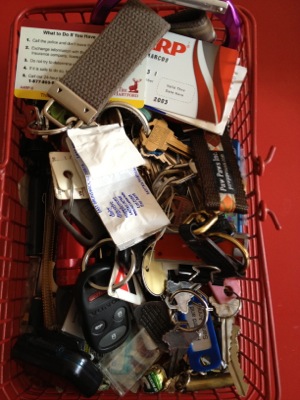
Step One: Empty the container and sort
I emptied the basket and sorting the keys by category. (I discovered lots of non-key items in the key basket as well.) Here’s a photo of the contents of that basket, spread out on my kitchen counter:
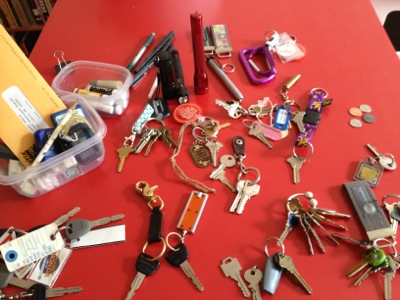
There were five categories of keys:
- House keys (a full set for each of us)
- House keys (a subset, for dog walking)
- Car keys (two cars, each with two keys)
- Keys to friends’ homes
- Keys to a work locations
- Untagged mystery keys
Step Two: Solve some mysteries
I took the mystery keys and tried them on our doors. We have a two-family house, but we live in the whole thing. That means we have two front doors and two back doors. And one of our front doors has two locks, though we only use one of them.
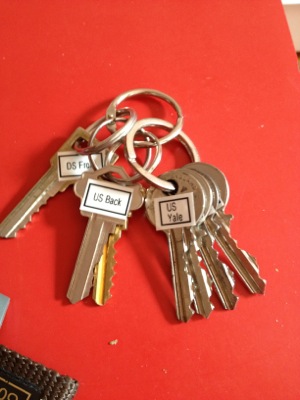
In that process, I was able to identify seven previously unidentified keys to our house:
Step Three: Label the keys
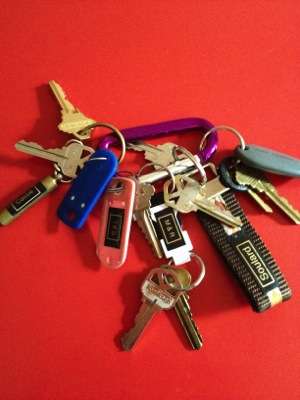
I got out my label maker and created labels for all the keys to our friends’ homes and work locations and for the newly identified keys. I didn’t bother to label the keys that are on our daily key rings; we know them by sight.
Step Four: Organize the keys in a new container
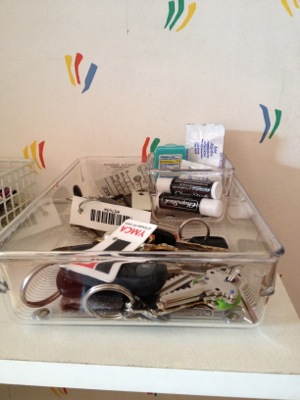
Barry and I agreed that the wire basket wasn’t great because keys would sometimes get caught in the holes. So I replaced it with a clear plastic drawer organizer I had on hand. Since one of the problems had been that it was hard to find the keys we needed among the many keys in the basket, I decided to place only the first three categories of keys in this new container. (Main key rings, dog-walkings, car keys.)
I put the labeled friends’ keys on a carabiner and the extra keys for our doors on a binder ring. I placed those two bundles in a basket that sits on the shelf next to the key basket. (That basket also holds eye glasses and cases.)
Step Five: Organize a few non-key items in the container
There were a few items in the old key basket that we like to have close at hand when we’re walking out the door. They include lip balm, lactase enzyme tablets and a little magnifier/flashlight that makes menu reading easier, and a small flashlight for nighttime dog walking. So I took a smaller drawer organizer and put into the larger one to isolate most of those items, so they’re not in the way.
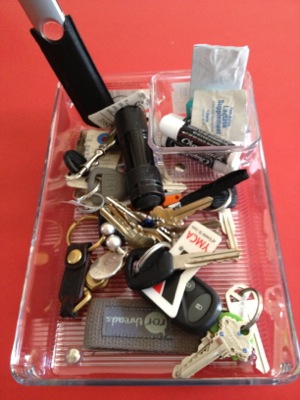
Overall, I’m really pleased with how this worked out. It’s not perfectly organized by any stretch of the imagination. But it is organized enough: The keys we need most often are easier to grab and it will be as easy as ever to put them away. Now we can easily identify our friends’ keys when we need them. And if we need an extra set of our own to give someone, they’ll be easy to find.
(I bet you’re wondering what we did with the keys we couldn’t identify. The organizer in me wanted to get rid of them, but my husband was more comfortable keeping them. I put them in a zip-top bag marked “These keys are not for our house” and put them in a drawer in our extra kitchen where I would know to look for them if we were ever looking for keys that someone said they had given us.)
Gretchen Rubin on self-knowledge
I’ve long been a fan of Gretchen Rubin and her Happiness Project.
She was one of the fantastic speakers at the World Domination Summit I attended in July. Her topic was self-knowledge and how being aware of who you are makes happiness much easier to achieve. It was fascinating and enjoyable.
The talk was full of nuggets like these:
- When we acknowledge the truth of who we are, we must also acknowledge who we are not and who we will never be.
- What you envy is really revealing.
- We should always pay special attention to anything we try to hide (in other words, pay attention to what we lie about).
- What you enjoy doing as an adult is usually related to what you did for fun when you were ten years old.
- People are either abstainers or moderators — and once you know your own nature, it’s much better to organize things to suit yourself (this is fascinating stuff!)
- Gretchen has identified four categories of people that reflect the tendencies people have when it comes to habits:
- Upholders, who respond to outer and inner expectations alike
- Questioners, who question all expectations (outer and inner)
- Rebels, who resist all expectations (outer and inner)
- Obligers, who meet outer expectations but have trouble exposing inner expectations on themselves
In the talk, Gretchen explained the implications of being in each category. (I’m an Upholder, btw.)
You can learn more from Gretchen Rubin by reading her books, The Happiness Project and Happier at Home or reading her blog, The Happiness Project.
Or you can just spend 40 minutes watching the video of her World Domination Summit talk. Trust me, it’s 40 minutes well spent.
Gretchen Rubin from Chris Guillebeau on Vimeo.
Gretchen’s next book is on habits. I can’t wait to read it!
Worth repeating: Working with an organizing team
I wrote this blog post in February 2012, and it’s more true now than ever. I’ve renamed my team organizing OPERATION: PEACE OF MIND and these days I’m doing more team organizing than one-on-one organizing. The results are amazing!
When I started my organizing business in 2005, I exclusively worked one-on-one with clients. It’s intimate, fulfilling, valuable work. But it can be really slow. And that means progress is harder to see and it can become discouraging for the client.
A few years ago, I started to be approached by clients who had very large, whole-house decluttering jobs. I realized that bringing in more help was in order. And so every now and then I would put together an organizing team to effect quick change on giant projects.
In the last year or so I realized that it wasn’t just huge or overwhelming projects that could benefit from a team approach. As the long as the client can handle the hubbub and the faster pace of a team, there are many benefits, not the least of which is the visible results we see after a single session.
I don’t have employees. When I put together an organizing team, I use independent contractors, members of the St. Louis chapter of the National Association of Professional Organizers. I call on organizers I know personally, thanks to NAPO St. Louis. I’m always on site supervising them and coordinating the efforts. I’m also typically the one working with the clients to guide decisions.
Here are some of the advantages I have found to team organizing:
- We get a whole lot done. If I’m working one-on-one with a client, I not only guide the decisions, but implement them. When I’m working with a team, there’s someone to do the leg work and everything happens a whole lot faster. Also, the team members pre-sort items for the client before the keep/donate/toss decisions are made (in a decluttering situation), which makes the decision-making much easier. As a result, the client sees visible progress, which isn’t always the case after a one-on-one session.
- It’s economical. I charge less for the time of organizing team members than I charge for my own time. So bringing in a team is not only faster than working with me one-on-one, it’s less expensive.
- More minds are better than one. I populate my teams with smart and talented organizers. I’d be crazy not to tap into their considerable skills and knowledge on the job. While I’m working with the client, I frequently consult team members on the best way to approach or organize a space. So the client benefits from the cumulative knowledge of the group.
- It’s fun! All the organizers I use love working on teams. Doing work we love (sorting and organizing) alongside our colleagues practically makes us giddy. And that’s contagious. While it’s tiring for the client to make a lot of decisions in a short period of time, most confess to having fun while doing it during our team jobs. Time flies.
Here’s a before and after combo from a team job at the end of 2010. Two of the organizing team members worked in this kitchen while the client worked with me and other team members in another part of the house. The client gave basic parameters and was brought in to answer questions periodically. She was thrilled at the end of the day.
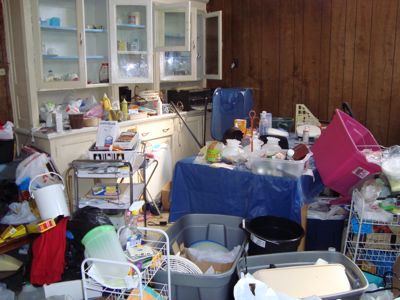
A cluttered kitchen before a team arrived to help.
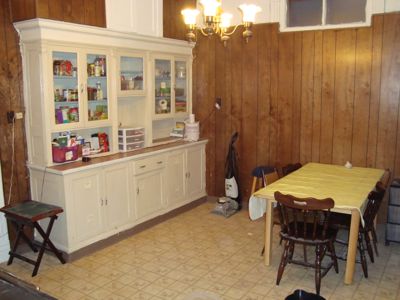
Two organizers created this transformation as part of a team project.
This year, my goal is to help more clients this way. I’m hooked on the fun of the team approach and the quick results. If you have a big project that seems overwhelming, maybe I could bring in an organizing team to help you. Take a look at my Team Organizing page to read a few more details. Then feel free to give me a call or shoot me an email to discuss how a team might help you!
Do you have a bucket list?
You know what a bucket list is, right? It’s a list of things you want to do before you die.
I’m very goal-oriented, but I have to admit I’ve never taken the time to create a bucket list. Today, I read an article on Fast Company’s website called How Creating a Better Bucket List Becomes a Blueprint for Living Your Best Life-. It made me want to take some time out and really think about such a list.
I think my favorite part of the article might have been item number three: Improve your daily life. I love the idea of a bucket list not being all about single events, but rather about achieving goals that enhance your life.
I have a retreat coming up next month; if I don’t do it before then, I think I’ll take some time to create a really mindful bucket list.
I’m also a big believer in item number four: Build in accountability. Perhaps after I create this list, I’ll share it here!
If you haven’t created a bucket list, you might want to check out this article!
Search
Recent Posts
- Worth repeating: Figuring out what to watch on TV
- The power of incremental progress
- Podcast guest spot on the role of organization for folks with chronic illness
- No excuses series (part 3): "It was a present"
- No excuses series (part 2): "I paid a lot for that item"
- No excuses series (part 1): "But I might need it!"
- Retiring the New Organizer Guides
Tags
About Janine

Hello! I’m Janine Adams — a certified professional organizer based in St. Louis, and the creator of Peace of Mind Organizing®.
I love order, harmony + beauty, but I believe that the way that you feel about yourself and your home is what truly matters.
If you’re ready to declutter with a purpose and add more ease to your life, you’ve found the right blog — and you’ve found the right company.
read more »Links
- Getting to Good Enough podcast
- National Association of Productivity and Organizing Professionals
- Peace of Mind Spending
- Are you interested in becoming a professional organizer?
- Shannon Wilkinson, life coach
- Organize Your Family History
- Ravelry
- Institute for Challenging Disorganization
- NAPO St. Louis