20th anniversary reflection: Working with a professional organizer
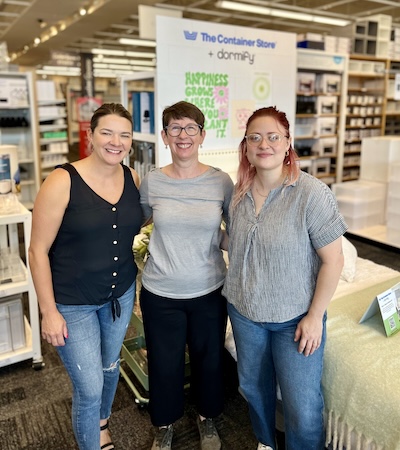
Looking back through two decades of client relationships, I’m reminded of this post I wrote in 2011 about setting expectations and building trust. After 20 years and hundreds of transformations, these principles remain at the core of every successful organizing project. Here’s what I wish every potential client knew…
If you’re reading an organizing blog, chances are pretty good that you fall into one of three camps:
- You’re a professional organizer (or an aspiring one)
- You’d like to work with a professional organizer
- You’re a fairly organized DIYer looking for ideas
This post is for those of you who fall into the second category. If you’d like to work with a professional organizer, I’d love to provide you with some advice to optimize that experience, should it come to pass.
Choosing an organizer
- Check out your choices thoroughly. You can find professional organizers at the website of National Association of Productivity and Organizing Professionals and the Institute for Challenging Disorganization. If you’re in St. Louis, you can go to the NAPO-St. Louis website to see all the chapter members. (If you’re not in St. Louis, you can search the Find A Pro directory on the NAPO website for an organizer near you.) Choose some local organizers and read websites, look at testimonials and before and after pictures. Call any organizers you’re interested in who don’t have websites.
- Ask around. If you know folks who have worked with organizers, quiz them on their experience
- Know what you’re looking for. Do you want an organizer who tells you what to do (some people do)? Or one who involves you in the process of coming up with solutions?
- Trust your gut. If an organizer’s website or telephone manner resonates with you, that’s a good reason to pick her (or him).
- Don’t bargain shop. This is a field where fees are usually commensurate with training and experience. If you’re challenged by chronic disorganization, for example, you’d be wise to select an organizer with training and experience in working with chronically disorganized clients. And you may pay more for that.
Working with an organizer
- Resist the temptation to clean up for your organizer. If your home is messy, you may feel embarrassed. Try to set that aside so that the organizer can see the natural state of your home in order to help you best. Mess and piles can provide clues.
- Be honest. Try not to anticipate what the organizer wants to hear. Instead, just answer all questions honestly, even if you’re a little embarrassed. Your organizer can help you best if you’re honest in everything you tell her.
- Be realistic. How long have you been dealing with disorder in your life? Probably quite some time. Unfortunately, organizers don’t have magic wands, so we can’t fix things instantly. Recognize that this is a process that might take awhile.
- Be prepared to learn new behaviors. If you’re dealing with a lot of clutter, the first step might be decluttering. But after that, you’re more than likely going to need to change your habits and create new routines to ensure that the clutter doesn’t come back. If you don’t change your behavior, the order that you and your organizer create might be temporary.
- Do your homework. If you and your organizer agree that you’ll do homework, try to accomplish it. If you don’t, it may not be a big deal. But being honest and realistic about the prospect of what you can accomplish between appointments can help your organizer better plan the next session.
- Trust your gut (again). If you’re not clicking with your organizer, don’t be afraid to talk with her about it. This is intimate work and it’s essential that you have a trusting relationship and work well together. If you don’t feel it’s working with the organizer, perhaps the two of you can come up with a solution. If no solution is in sight, perhaps you can ask her for a referral.
- Keep your appointments. If you book an appointment with an organizer, try to keep that commitment. She’s set aside time for you and scheduled around that appointment. Last-minute cancellations can be costly for the organizer. And they’re costly for you, too, since you can’t get help if you don’t keep appointments.
- Expect backsliding. Most clients experience some backsliding, when life gets in the way and newly learned behaviors fall by the wayside. If you backslide, it doesn’t mean you’ve failed or your organizer isn’t effective. It just means you need to renew your efforts. Or perhaps tweak our systems.
- Be brave. It can be scary to let someone into your house for the first time in ages. It can also be scary to admit to your organizer that you haven’t done your homework or that you’ve not been able to maintain the order you created together. But organizers, by and large, are compassionate and non-judgmental people. Getting past the fear can help put you on the path to an orderly life.
When you hire a professional organizer (or an organizing team), you’re making a time and financial commitment to getting organized. Often, you’re making an emotional commitment as well. That can be very powerful! Together, you and your organizer can make a huge impact in your life.
Getting to Good Enough is coming back!
From 2018 to 2023, life coach Shannon Wilkinson and I co-hosted a weekly podcast about letting go of perfectionism so you can do more of what you love. That podcast was called Getting to Good Enough and we published 254 episodes before we brought it to a close.
When we started in 2018, we vowed to do it until it was no longer fun. By 2023, life had started to get in the way of fun so we said goodbye to the podcast.
Shannon and I have been friends since 2001 and we stay in close touch. Earlier this year we started talking about how much we missed our weekly conversations. So we decided to revive the podcast and set about doing all the things (so many things!) that needed to be done to get it going again.
Technology has changed a lot since we started the podcast and we’ve shifted providers and tools. The original podcast was audio-only but nowadays video is a must. So we’ll be offering it as a video podcast as well, on YouTube. (I fully expect most people to listen, rather than watch, though.)
We published a trailer today!
The focus of the podcast remains the same, though we’re giving ourselves permission to pretty much talk about whatever we want. (Perfectionism runs through pretty much everything.) If our test run is any indication, there will be a lot of laughter, as usual. Our new tagline is “A podcast to help you let go of perfectionism so you can live life with more ease, less stress and a lot more laughter.”
Starting tomorrow, we’ll be running a “Best of” episode each week for four weeks and then on September 4, the first new episode will air. We’ll publish every Thursday, as we did before.
You can subscribe to the podcast wherever you listen to podcasts. If you’re wanting to reacquaint yourself with the podcast, you can peruse the past 254 episodes in your podcast platform or at the newly revamped Getting to Good Enough website. You can also sign up for our email list on the website so that new episodes (starting with tomorrow’s “Best of” episode) land in your email inbox as soon as they’re published.
We’re looking forward to lots of fun discussions and hope you will listen and participate!
Expressing gratitude for large and small things

Today marks the one-year anniversary of something I am immeasurably, almost inexpressibly thankful for: my husband’s heart transplant. While life-saving and life-changing, it was not an easy experience for either of us (particularly Barry!). I can’t tell you how happy I am that it’s in my rear-view mirror.
There are so many aspects of the experience to be grateful for. Now that a year has passed, it’s easy for me to think of the many things are thankful for. I’ll name just a few here:
- the donor and his family
- Barry’s incredibly talented doctors
- the amazing hospital staff
- the fact that we’d moved just a few blocks from the hospital just days before his hospitalization (which made it much easier on me)
- our friends who supported both of us throughout the journey
- his new, robust heart — he feels better than he has in years
We’re having a party today for those who helped and are looking forward to celebrating what feels like a miracle.
It’s easy for me to remember to be grateful for this gigantic thing. But it makes me reflect on the fact that there are always so many little things in our lives to be grateful for on a daily basis. I’m definitely a glass-half-full kind of person but I don’t always take the time to think about all I am grateful for.
On and off over the years, I’ve had a gratitude practice, like this one that I blogged about back in 2021.
Celebrating this important anniversary is making me want to rejuvenate a gratitude practice. I’m going to try to remember to write down one thing I’m grateful for in my Bullet Journal every day.
How about you? Could you develop a gratitude practice?
Worth repeating: Building ease with daily habits

I wrote this post back in 2021. I’m still a big believer in the power of daily habits for creating ease in our lives. I’m sorry to say that my daily yoga habit is no longer as strong as it was back then, though re-reading this post is really motivating me to figure out the logistical challenges of daily yoga in our apartment and get back to morning yoga. My daily habits around my financial life are stronger than ever, I’m happy to say. And strengthening my core muscles around money has been extremely beneficial! I thought you might enjoy this reminder of how daily habits can make your life easier. What daily habits could you introduce into your life?
My word of the year for 2021 is ease. I don’t think I’ve ever had a more appropriate word. I’ve set the intention of trying to build more ease into my life and also use ease as a parameter around which I make decisions. It feels great.
This morning, while I was doing a gentle yoga practice, it hit me that the daily habits I’ve cultivated over the last year or more have really helped introduce a lot of ease into my life. Specifically, doing yoga every day has meant that yoga is so much easier than it was when I tried it for the first time two years ago. Not only do I know many of the poses (and I sometimes even anticipate them), they are much easier for me to do. That’s because daily practice has made me stronger and more flexible. And what 58-year-old person doesn’t love that?
Another area where daily practice has made a huge (life-changing!) difference is in my financial life. I’ve been working for myself for 25 years and it’s only been in the past six months or so that I’ve built a daily practice around tending to my finances. That has had the happy result that I’m always caught up with my bookkeeping in Quickbooks! This has been an elusive goal for many years.
The secret weapon of my financial life has been the software You Need a Budget (YNAB). (That’s a referral link…if you use it and end up subscribing, we each get a free month.) With YNAB I budget every dollar as it comes in and it’s actually fun. So every morning I actually enjoy logging in and categorizing any expenditures as well as budgeting any income from the past 24 hours. I’ve been using it since November 2018 for my business. (On January 1 of this year I took over our family’s finances in YNAB.) It took me awhile, but I’ve created the habit of entering anything that comes through YNAB into my business’s Quickbooks and double-checking periodically that everything is in sync. So I am blissfully caught up.
Thanks to daily habits (and wonderful Yoga with Adriene and YNAB), two big things that used to be real burdens for me (exercise and keeping track of finances) are now both easy and full of ease. That feels like a miracle.
Of course this can apply to so many things, including maintaining order, taking vitamins and supplements, and keeping up with email or filing. When we make something as easy as possible to do and we practice it daily, we allow ease to flourish.
I’m going to keep looking for other ways I can build ease into my life with daily practice!
You're reading a top organizing blog
Over the years, I’ve been pleased to see that this blog, which I’ve been writing for 19 (!) years, has consistently been included in Feedspot’s ranking of the Best Organizing Blogs and Websites and Best Decluttering Blogs and Websites. Feedspot updates their lists yearly and I’ve been slowly creeping my way up the rankings.
This year, the Peace of Mind Organizing blog is #3 on both lists!
Edited to Add: I just noticed that it’s now listed as the #2 Decluttering Blog for 2026! I know this isn’t a hugely meaningful accolade but I love the acknowledgment of my consistent effort to blog regularly. I’ve published 1755 blog posts since I started this blog in 2006. I feel fortunate to have the opportunity to express my thoughts in such a safe place.
To all my readers: Thank you!
20th anniversary reflection: You don't have to do it alone
As I celebrate 20 years of Peace of Mind Organizing® this year, I keep coming back to this fundamental truth I wrote about in 2010. This message feels even more relevant today—both for the clients we serve and for the team approach that has become the heart of the business. Sometimes the most important lessons are worth repeating and that’s what I’ll be doing each month as part of this anniversary series.
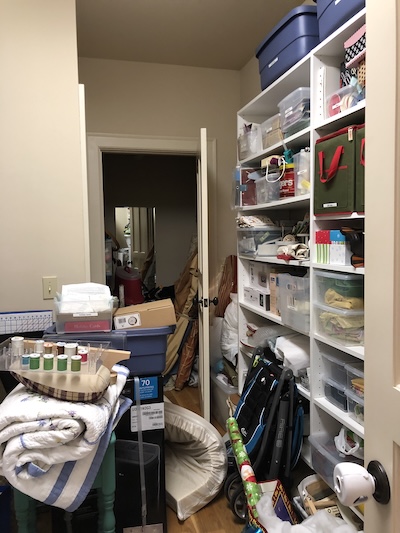
Before I became an organizer, I struggled with creating systems for getting my messy self to stay organized. I bought, read and learned from many books on organizing. (My friend, the Mississippi garden writer Felder Rushing once looked at my bookshelf and said with his distinctive Southern drawl, “Janine, you’d have a lot less clutter if you’d just get rid of these books on clutter.”)
When I decided to become a professional organizer, I started taking classes so I could bring expertise to the table. I learned, however, that I bring more than expertise to my client sessions. I bring support. If all you need is expertise, then reading about a topic might be sufficient.
But when it comes to organizing and dealing with clutter it can be really hard to get started on your own. That’s where finding a buddy or a professional to help can make a big difference.
By hiring a professional organizer you:
- Make a time commitment to working on your organizing goals
- Make a financial commitment, which can be very motivating
- Become accountable to someone
- Benefit from the organizer’s expertise
- Have some fun with it, because you have company
If your clutter or organizing challenges feel like more than you can handle alone, don’t be afraid to reach out for help. If you can afford one-on-one help with an organizer (or the help of an organizing team), believe me it will be worth the investment. If you can’t, look around the internet…there are some great lower cost options that can still give you the support you need.
Using self care to prepare for decluttering

In May, I republished one of my favorite blog posts, Self-care, which is about the importance of taking time for self care even if you feel like you should be working on decluttering and organizing your home. I suggested that you could use self-care activities as a reward for making some progress on your organizing projects.
I received a lovely email response from reader Joan Paul who suggested that self care could be an important way to prepare for the stress of a decluttering and/or organizing session.
She wrote:
Maybe filling our tank with self-care before starting a decluttering project is just as key or even more important than using it as a reward. Maybe if we are properly nurtured by our self-care we won’t be so paralyzed and overwhelmed about decluttering!
I love that way of thinking and to be honest I hadn’t thought of that way before.
Taking care of yourself is one of the most important things you can do to live a happy and healthy life. If clutter has gotten out of hand and you have difficulty addressing it, then incorporating some self care into the process (whether that’s before or after the decluttering session, or both!) can only benefit you.
Sometimes self care looks like calling in an organizer or an organizing team to jump start your activities or get it done swiftly. (I’m a huge believer in asking for help and wouldn’t have been able to survive last year’s move if I hadn’t hired organizers to get me packed and unpacked.) If you live in St. Louis, we’re happy to help you. If you live elsewhere, you can find an organizer near you at NAPO.net.
Photo by Maddi Bazzocco on Unsplash
Search
Recent Posts
- Worth repeating: Figuring out what to watch on TV
- The power of incremental progress
- Podcast guest spot on the role of organization for folks with chronic illness
- No excuses series (part 3): "It was a present"
- No excuses series (part 2): "I paid a lot for that item"
- No excuses series (part 1): "But I might need it!"
- Retiring the New Organizer Guides
Tags
About Janine

Hello! I’m Janine Adams — a certified professional organizer based in St. Louis, and the creator of Peace of Mind Organizing®.
I love order, harmony + beauty, but I believe that the way that you feel about yourself and your home is what truly matters.
If you’re ready to declutter with a purpose and add more ease to your life, you’ve found the right blog — and you’ve found the right company.
read more »Links
- Are you interested in becoming a professional organizer?
- Organize Your Family History
- Peace of Mind Spending
- NAPO St. Louis
- Shannon Wilkinson, life coach
- Getting to Good Enough podcast
- Institute for Challenging Disorganization
- Ravelry
- National Association of Productivity and Organizing Professionals